.avif)
Proven performance.
Renewable fuels.

HPDI™ technology enables engines to run on lower-carbon fuels while retaining the compression ignition cycle, the principle behind diesel-engine performance. The only fuel system bringing diesel performance to renewable fuels - natural gas or hydrogen - same power, same range, same durability as diesel.

Built to cut emissions, retaining diesel-grade performance.
The multi-fuel platform is not a hedge. It is a structural advantage. As infrastructure and regulation shift by market, the same engineering platform adapts.


Diesel-like performance

1 system, multiple fuels

Simpler integration

Up to 100% CO₂ reduction
Renewable fuels. Compression-ignition cycle.
A dual concentric needle injector delivers a ~4% diesel or HVO charge at 300 bar to ignite the renewable fuel around it, directly in the cylinder. The engine keeps its diesel combustion cycle — torque, range, and engine braking intact.
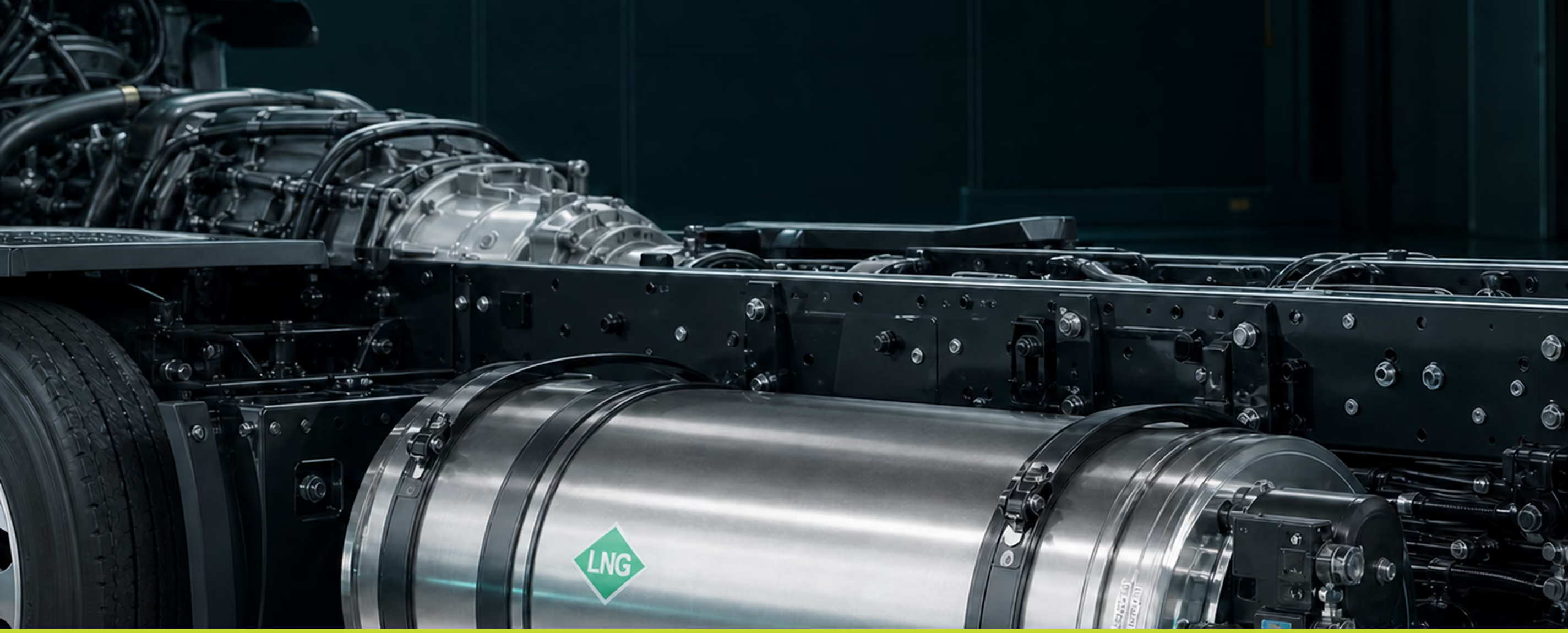
The injector
One injector uses concentric needles to precisely deliver high-pressure pilot and main fuels.

Multiple fuels
Common engine-platform foundation for LNG/bioLNG, hydrogen, and other renewable fuels.
The base engine
Retains diesel architecture and core engine systems, replacing only the fuel system.
Natural gas and a path to hydrogen.
Built around existing natural gas infrastructure, with renewable natural gas and hydrogen blends supported on the same platform.

For applications where liquefied storage suits the duty cycle. Already on the road in over 12,000 trucks today.
Compressed natural gas today, at up to 10 MPG diesel gallon equivalent.
Renewable natural gas as a drop-in switch for deep emissions cuts.
Hydrogen or hydrogen blends supported as fueling infrastructure matures.
Different priorities.
One system that meets both.

For fleets
Lower cost and emissions, no compromise

For OEMs
Integrate, don't rebuild
Different operating demands. One proven platform foundation.
No single technology decarbonizes road transport. Duty cycle decides the winner, and long-haul is the one duty cycle where the alternatives still fall short.
Regional distribution
Diesel-equivalent operation with immediate CO₂ reductions vs diesel.
Heavy-duty long-haul
1,000 km range on LNG, 500 hp, 60t payload, 15-minute refuel. This is the duty cycle HPDI was built for.
Built on decades of proprietary engineering.
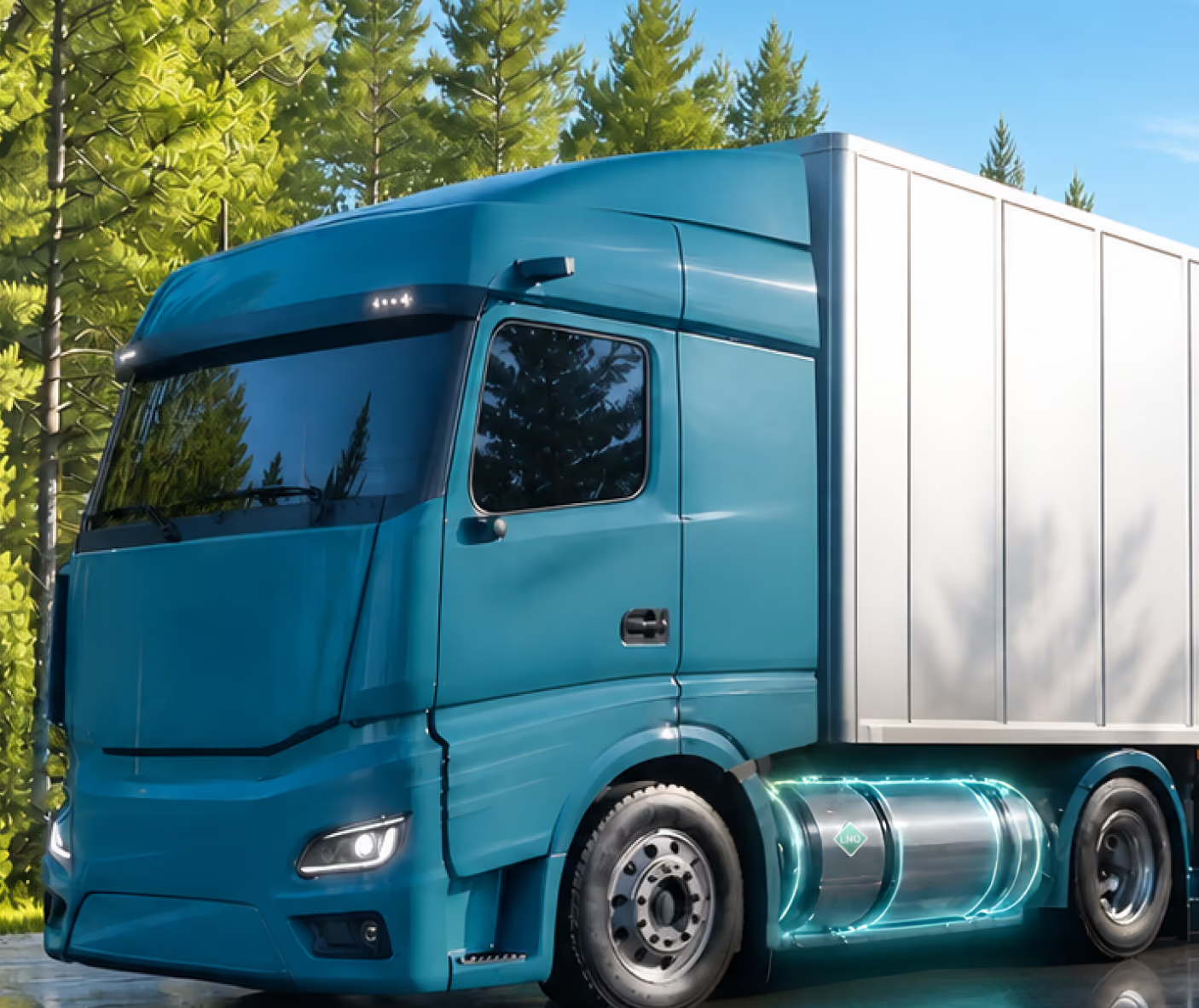




Westport Rebrands as Aetherion™ Technologies, Focused on Accelerating Proven Solutions for Heavy-Duty Clean Transport
New identity highlights growing demand for high-performance, commercially ready solutions to support affordable decarbonization across global fleets New identity highlights growing demand for high-performance, commercially ready solutions to support affordable decarbonization…

October 15, 2026




.jpg)